FOUR OFFICES ACROSS PENNSYLVANIA · TELEHEALTH STATEWIDE
Life Transitions Therapy in Pennsylvania
Some changes you chose. Some arrived without asking. Either way there’s a stretch where the old life is over and the new one hasn’t taken shape yet — and that stretch is harder than anyone warns you.
Life transitions therapy helps you move through a major change — a divorce, a career shift, a loss, retirement, a new baby, an empty house — with structure and support rather than alone. Your therapist helps you name what actually ended, sit with the uncertainty that follows without rushing it, and build a next chapter you choose on purpose. In person at four Pennsylvania offices or by secure telehealth statewide.

The Real Problem
The old map doesn’t work anymore
People rarely come in because of the event itself. They come in because the version of themselves that made sense in the old life doesn’t quite fit the new one — and nobody hands you a replacement.
Who this is for
The changes that bring people in
Some of these you chose. Some happened to you. The internal experience is remarkably similar either way — which is why the same work helps across all of them.
Where it starts
Something ended. That deserves to be said
Most advice about change skips straight to the opportunity, and it lands badly for a reason — something real was lost, and being told to look on the bright side while you’re still in it is its own kind of loneliness.
So the work starts by slowing down. What happened. What did it cost. What are you actually ready to put down, and what deserves to come with you into whatever’s next. That sorting is not dwelling; it’s the thing that makes moving forward possible, because you can’t let go of something you’ve never let yourself name.
The victory here isn’t forgetting the old life. It’s being able to say: that chapter mattered, and I don’t have to live in it.
“I know what my life used to be. I’m not sure what it is now.”

Where you are now
Not knowing isn’t failure — it’s the middle
There’s a stretch between the ending and the new beginning that has no name in ordinary conversation, so most people assume they’re failing at it. You’re not. The old identity has loosened and the new one hasn’t formed, and that gap is genuinely uncomfortable — but it is a stage, not a verdict. Almost everyone who reaches out is standing in it. Most of them believe they’re the only one.
“What if not knowing isn’t failure? What if it’s the only moment you get to choose on purpose?”
What the middle actually feels like
Flat, mostly. Restless without direction. Competent at work and hollow driving home. People describe going through the motions of a life they can’t quite feel, and they usually apologise for how ungrateful it sounds — especially when the change was one they chose, or one everyone else called good news.
Why rushing it backfires
The instinct is to fix the discomfort by deciding something quickly — a move, a job, a relationship, anything with a shape to it. Decisions made to escape uncertainty tend to recreate the thing you left. The alternative isn’t waiting passively. It’s using the gap deliberately, while the old assumptions are loose enough to actually examine.
The shift
From what happened to what’s next
The work isn’t positive thinking. It’s a genuine change in where you’re standing — from something being done to you, to something you’re deciding. Four sentences that tend to change along the way.
How it works
A clear plan — three steps
You don’t need to know what you want before you start. Working that out is the point, and your therapist walks each stage at a pace you set

Where it goes
A year from now, this could be the turning point
There’s a question therapists ask that sounds almost unfair the first time: suppose you’re sitting here a year from now, telling me this became one of the most important turning points of your life. What happened?
Most people can’t answer it in the first month. By the third, something usually surfaces — a trip, a different kind of work, a friendship that got real, a marriage that came back once the house went quiet. It starts vague and gains detail, and at some point the future has enough texture to compete with the pull of the past.
That’s the tipping point. Not the day the grief stops. The day you want what’s ahead more than you want what’s gone.
Progress in life transitions therapy usually looks like small behavioural changes before it looks like feeling better — making the call, setting the boundary, booking the trip, applying for the role. Most people notice meaningful change within a few months. The skills for handling the next transition are the part that stays.
MEET THE TEAM
The therapists behind your care
Every therapist is personally selected by Cristina for clinical skill, warmth, and commitment to real outcomes.

Autumn Staszak
LPC · Licensed Professional Counselor
Locations: South Hills in person · Telehealth statewide
Skills: Gottman Method, TF-CBT, CBT
Services: Depression Therapy, Anxiety Treatment, Women’s Mental Health
Healing begins when people feel safe enough to be seen, heard, and understood.
Autumn Staszak, LPC, works with adults and couples on anxiety, trauma, and work stress — and with couples on communication, affairs, and uncoupling. 20+ years, TF-CBT certified.

Caitlynn Beatty
LSW · Licensed Social Worker
Locations: Altoona · Telehealth
Skills: CBT, DBT, Family Systems
Services: Children & Adolescents, Grief & Loss, ADHD
Sometimes we just need one person who is truly there to support us.
Caitie Beatty, LSW, works with children from age six, teens, and adults on anxiety, grief, ADHD, and family change — building sessions around what each client already cares about.
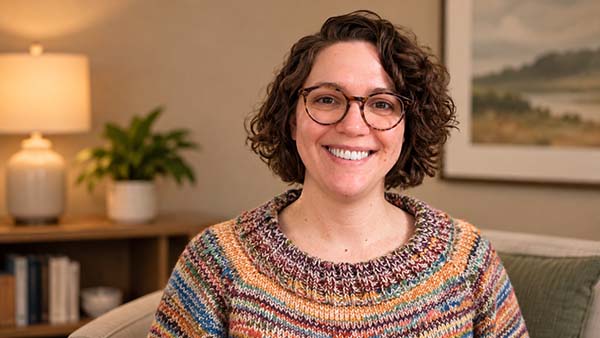
Christina Binder
LSW · Licensed Social Worker
Locations: Center City Philadelphia · Telehealth
Skills: Gottman Method, EFT, CBT
Services: Marriage Counseling, Life Transitions, LGBTQ+
Therapy can be meaningful without always feeling heavy.
Christina Binder, LSW, works with adolescents, adults, and couples on anxiety, identity, and life transitions — with warmth, creativity, and humor. Gottman and EFT for couples.
READY TO START?
You don’t have to know where you’re going to start moving
Transitions have a way of stretching. The stretch between who you were and who you’re becoming can last a long time if nothing moves it along — and the longer you wait for clarity to arrive on its own, the more it starts to feel like this unsettled version is just the new normal. It isn’t. You don’t need a plan to begin, and you don’t need to have figured out what you want next.